
NikkahJor
Online Nikkah: Process, Requirements, and Important Guidelines
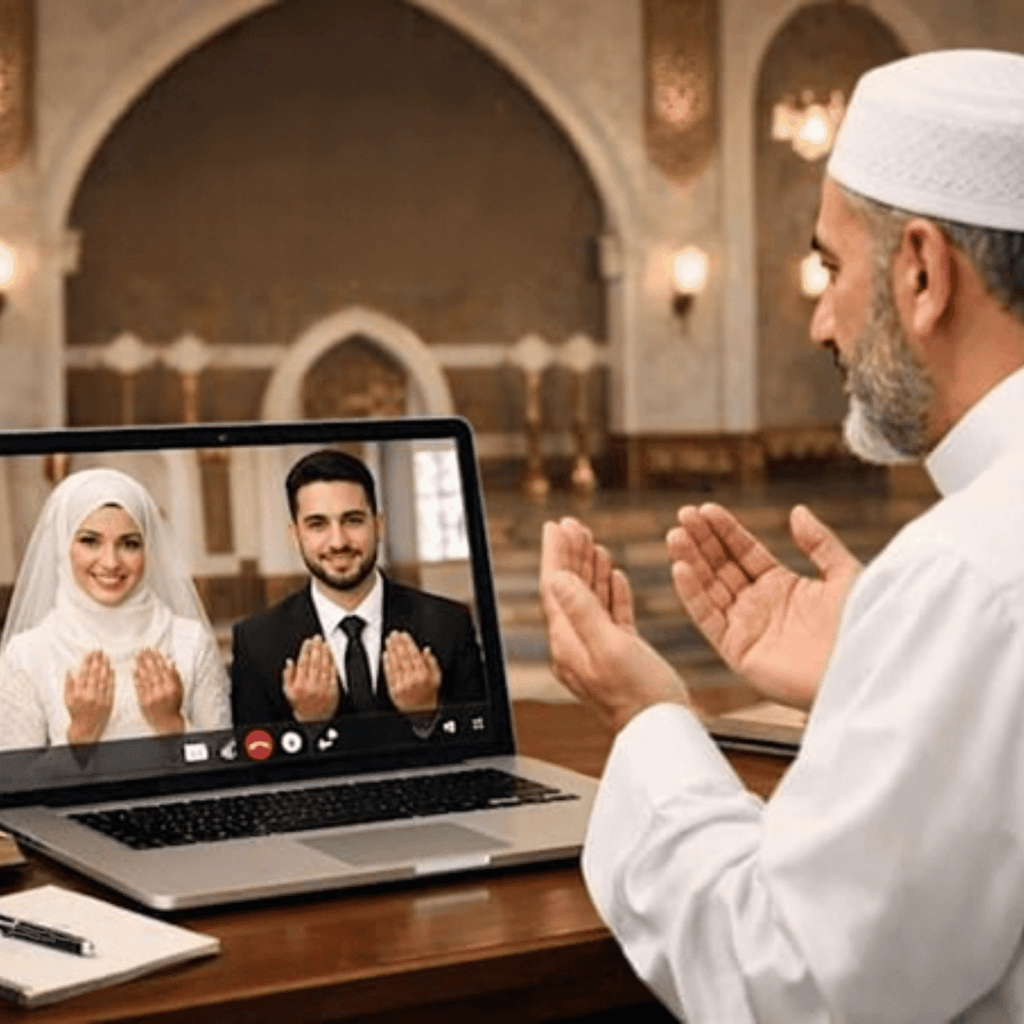
Introduction to Online Nikkah
Online Nikkah has become an option for couples who cannot easily attend the same physical location for their marriage. Traditionally, a Nikkah takes place in one gathering, such as a wedding hall, home, office, or hotel. Today, technology has introduced new ways to arrange a Nikkah when the bride and groom are in different locations.
One important part of this process is the appointment of a representative, known as a Wakeel, when required under the chosen Nikkah arrangement.
What Is an Online Nikkah?
An Online Nikkah is a marriage arrangement in which some participants may join remotely through an online connection, while the necessary marriage proceedings are carried out according to the applicable Islamic and legal requirements.
Unlike a traditional Nikkah ceremony, where everyone may gather in one physical location, an online arrangement can involve people joining from different places.
For example, the bride may be at home while the groom is in another city or country. Depending on the circumstances, representatives and witnesses may be involved in completing the marriage process.
It is important to remember that being connected online does not automatically make a Nikkah valid. The requirements depend on the circumstances, the applicable interpretation of Islamic law, and the relevant country’s marriage laws.
How Does the Online Nikkah Process Work?
The Online Nikkah process should be arranged carefully. The following points explain the representative-based procedure described above.
1. Appointment of a Wakeel by the Bride
The bride may appoint a Wakeel to represent her in the Nikkah proceedings. A Wakeel is a person authorized to act on behalf of another person in a particular matter.
The appointment should be made according to the applicable Islamic requirements. Where witnesses are required for the appointment, their presence and role should be confirmed with a qualified Islamic scholar or Nikkah registrar.
2. Appointment of a Wakeel by the Groom
Similarly, the groom may appoint a Wakeel to represent him in the marriage proceedings. The appointment should clearly establish the representative’s authority to act on the groom’s behalf.
The exact procedure should be confirmed before the Nikkah takes place, particularly when the bride and groom are in different locations.
3. Presence of the Required Witnesses
Witnesses play an important role in the Nikkah process. Their required number, qualifications, and presence depend on the applicable Islamic legal requirements and the circumstances of the ceremony.
In a representative-based arrangement, the roles of the Wakeels and witnesses must be clearly established. It should not be assumed that every online arrangement follows exactly the same rules.
4. Conducting the Nikkah Ceremony
Once the necessary arrangements have been confirmed, the Nikkah can be conducted according to the applicable Islamic requirements and legal procedure.
The person conducting the ceremony should verify the consent of both parties, the authority of any appointed representatives, the required witnesses, and any other conditions that apply.
Proper preparation is essential for an Online Nikkah. Couples should confirm the procedure with a qualified Islamic scholar and an authorized marriage registrar before proceeding.
Important Requirements for an Online Nikkah
Before arranging an Online Nikkah, consider the following points:
- Free consent: Both the bride and groom must give their consent to the marriage.
- Wakeel appointment: If representatives are being used, their authority must be properly established.
- Witnesses: The required witnesses must meet the applicable Islamic requirements.
- Islamic conditions: The marriage must fulfil the relevant Shariah requirements.
- Legal registration: The couple should follow the marriage registration laws of the relevant country or jurisdiction.
- Identity verification: The identities of the bride, groom, representatives, and other required participants should be confirmed.
- Clear communication: Everyone involved should understand their role in the ceremony.
- Qualified guidance: A qualified Islamic scholar or authorized Nikkah registrar should review the proposed arrangement in advance.
These steps can help couples avoid confusion and prepare for their marriage with greater confidence.
Is an Online Nikkah Valid in Islam?
The validity of an Online Nikkah depends on the circumstances and whether all the applicable Islamic requirements have been fulfilled. Scholars may differ in their views about certain remote marriage arrangements, including the use of live video calls and the presence of parties in different locations.
For this reason, it is not appropriate to assume that every Online Nikkah is valid simply because a video call takes place or a Wakeel is appointed.
Couples should explain their exact circumstances to a qualified Islamic scholar who understands the relevant rules. They should also confirm the legal requirements for marriage registration in their country.
Benefits of Arranging an Online Nikkah
When properly arranged and legally permitted, an online marriage arrangement may offer practical benefits.
- Convenience: It may help couples who live in different cities or countries.
- Family participation: Relatives who cannot travel may be able to participate remotely where permitted.
- Reduced travel: Some participants may not need to travel to the same location.
- Better planning: The couple can arrange the ceremony in advance with the relevant representatives and witnesses.
- Accessibility: It may provide an alternative for couples facing travel or distance-related difficulties.
These benefits do not replace the need to fulfil all Islamic and legal requirements.
Online Nikkah in Pakistan: Important Legal Considerations
Couples planning an Online Nikkah in Pakistan should confirm the applicable marriage registration procedure before the ceremony. Requirements may depend on the circumstances, the relevant local authorities, and the way the marriage is conducted.
It is advisable to contact an authorized Nikkah registrar and confirm whether the proposed arrangement, use of a Wakeel, identity verification, documentation, and registration procedure will be accepted.
Do not rely only on an online service provider’s promise that a ceremony will be valid. Obtain appropriate Islamic and legal guidance before proceeding.
Conclusion
Online Nikkah offers a possible way for couples in different locations to arrange their marriage. However, it involves more than simply connecting through the internet. The roles of the bride, groom, Wakeels, and witnesses must be understood, and all applicable Islamic and legal requirements must be fulfilled.
Before arranging an online Islamic marriage, consult a qualified Islamic scholar and an authorized Nikkah registrar. With proper preparation, clear communication, and appropriate legal guidance, couples can better understand the process and make informed decisions about their Nikkah.